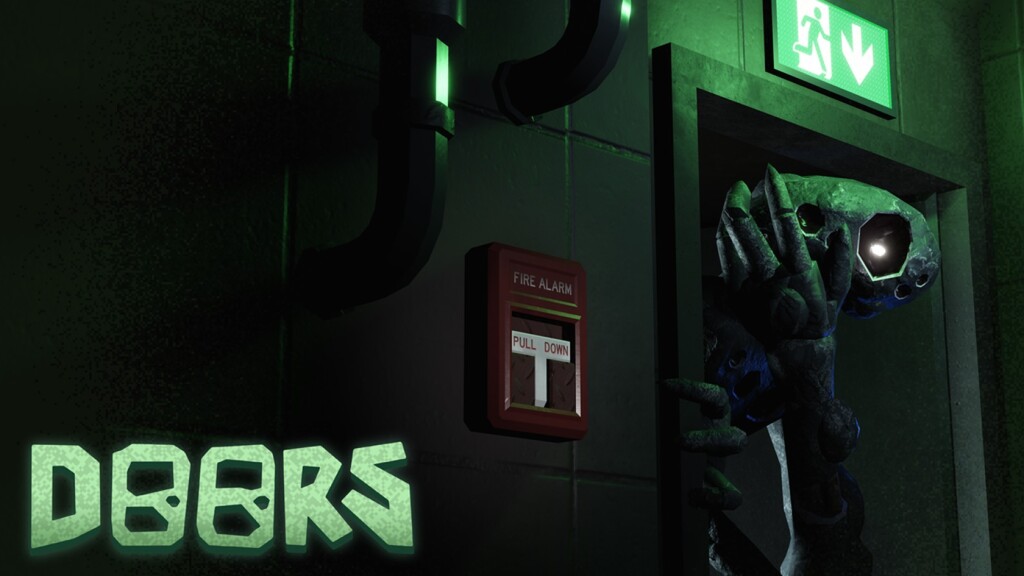
DOORS is unusual in that its official description actively discourages preparation:
"We recommend entering without a guide; use each death as a lesson." It also warns
about loud sounds and flashing lights and recommends headphones and max
graphics. That is a design statement, and it is the reason a DOORS private
server is a more interesting question here than it is in most Roblox games.
The short answer: a private server changes who shares the room with you. It does not
change what the game is.
What a private server gives you
Stripped to what actually matters for a run-based horror game:
- A controlled group. You decide who is in the run. No random players
opening doors ahead of the group, no strangers pulling entities into rooms you were not
ready for.
- A quiet first run. DOORS is at its best when you do not know what is
behind the next door. Playing it with people who already know — or with nobody at all —
preserves that.
- Room to learn by dying. The game explicitly frames death as instruction.
A private server lets you fail repeatedly without an audience and without someone else
setting the pace.
- Repeatable practice. If a particular section keeps ending your run, a
private server is the cheapest way to reach it again quickly.
What it does not give you
- It does not make the game easier. Entities, room generation and the
mechanics that end runs are unchanged. A private server is not a difficulty setting.
- It does not disable the sensory warnings. The official note about loud
sounds and flashing lights still applies — if anything, headphones matter more in a quiet
private run, because audio cues are a genuine part of the design.
- It does not replace the intended experience. The developer recommends
going in blind. Reading a full entity guide before your first private run defeats the
point of buying one.
When a private server is genuinely worth it
- You are playing with a fixed group of friends and want the run to be
yours rather than a public lobby's.
- You are sensitive to surprise or sensory intensity and want to learn the
game's rhythm at your own pace.
- You are stuck on a specific section and want to reach it repeatedly
without waiting on public matchmaking.
When it is not worth it: if you only play occasionally and mainly want the social
chaos of a public lobby. DOORS' public runs are a large part of why the game is
7.9B visits and 14,490 players strong — the shared panic is the product.
Practical notes
- Set graphics to maximum and use headphones, as the official description recommends. In a
horror game built on audio and lighting cues this is not cosmetic advice.
- Take the "each death is a lesson" framing literally. A private run where you die at the
same door three times is progress, not failure.
- Do not pre-read everything. The developer's recommendation to enter without a guide is
the closest thing DOORS has to an official instruction.
Related reading
For the mechanics themselves — entities, items, floors and how the hotel is structured — the
DOORS wiki is the reference page. If you are
wondering whether there is an item economy worth engaging with,
DOORS trading answers that directly. For a
different take on private servers in a run-based game, see
99
Nights in the Forest private server.
Details and codes are on the DOORS game page, and similar titles
are collected under Roblox action and combat games.