

A DOORS wiki covering the hotel loop, the entity families that hunt you, the items that keep you alive, and what changes between floors.
DOORS is the horror game by LSPLASH that turned "open the next door" into a genre. This wiki page collects the structural knowledge you need before your first run: what the loop is, which entity families exist, what the items do, and how the floors differ. Nothing here is a secret or a hack — the developer's own description recommends entering without a guide and treating every death as a lesson, and that is still the best way to play.
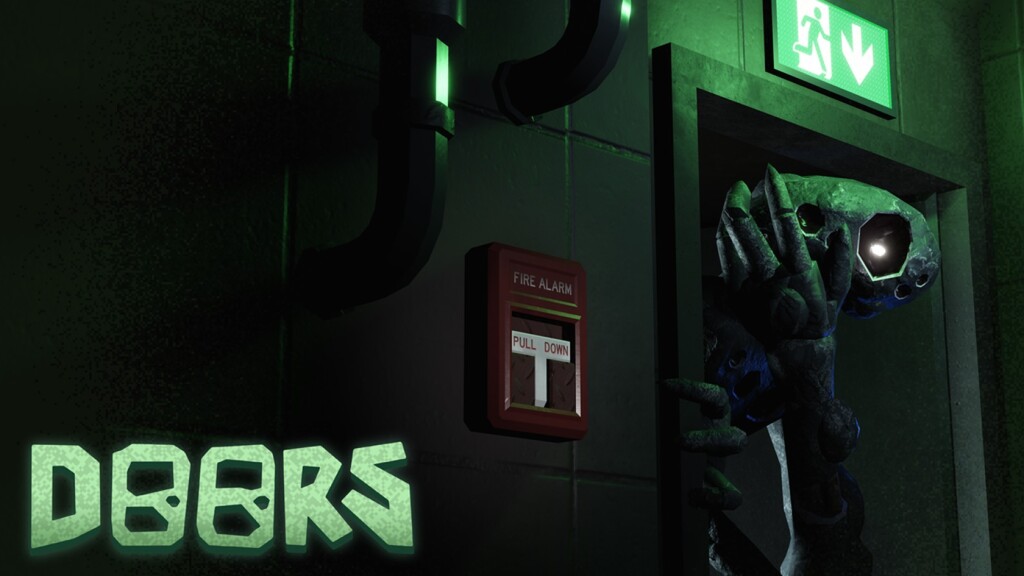
DOORS is a first-person horror game built around a single verb: opening doors. You work through a hotel one room at a time, and every room can hold something that wants you gone. The game has been live since 2021, sits at billions of visits, and runs servers of up to 50 players. Headphones and max graphics are officially recommended — audio cues matter as much as visuals.
Each run is a straight line forward: enter a room, deal with whatever is in it, open the next door, repeat until you reach the exit. Death is not a soft fail — it ends the run and sends you back. That structure is why the game rewards learning over speed on your first attempts: you are mapping entity behaviour, not racing a clock.
Two systems sit outside the raw loop. The in-game guidance system exists for players who are stuck, and joining the LSPLASH group grants a free revive, which is the closest thing the game has to a safety net. Neither changes the fact that the hotel is the teacher.
DOORS enemies are best understood as families rather than a flat list, because the behaviour pattern is what kills you, not the name:
Items in DOORS fall into three practical buckets: light sources that let you read a dark room, consumables that patch a mistake mid-run, and revival tools that extend a run after a down. The important wiki-level takeaway is that no item makes you immune — they buy information and time, and the entity behaviour tables above are still what actually save you.
The hotel is floor one, and the game has since expanded downward through the mines and the areas beyond, each with its own palette and entity mix. Progress is linear per floor, so a clean hotel run is the prerequisite for everything further down. If you are preparing for a specific floor, the community vocabulary around rooms and sections is the fastest thing to learn before you queue up.
New players should start with our full DOORS getting-started guide, which walks the first rooms step by step. If you are looking for free rewards instead, keep the working DOORS codes list handy, and if you came here wondering about the marketplace side, our DOORS trading breakdown explains why the honest answer there is "there isn't much of one". Everything about the game itself — stats, updates, related guides — lives on the DOORS game page.
Playing other horror Roblox games? The Dandy's World wiki covers the same survival-horror vocabulary in a mascot-horror setting, and you can browse more horror-adjacent picks on the Roblox games hub.