


This is the directory's live-player ranking at the time of the 72-game sync: the 72 games that currently carry non-zero values for visits, concurrent players and favourites, ordered by how many people were in them when the figures were last pulled. Concurrent players is the most volatile of the three stored statistics and the only one that describes the present rather than the accumulated past, which is why this list reshuffles more than any other ranking here.
| # | Game | Concurrent players | Lifetime visits | Favourites |
|---|---|---|---|---|
| 1 | steal-an-egg | 1,212,468 | 9,192,723,197 | 8,540,889 |
| 2 | murder-mystery-2 | 1,209,560 | 31,647,876,893 | 24,631,516 |
| 3 | brookhaven-rp | 439,019 | 88,826,504,075 | 30,640,499 |
| 4 | sky-assassin-jujutsu-shenanigans | 328,801 | 7,725,506,397 | 3,190,562 |
| 5 | rivals | 209,281 | 18,914,577,510 | 95,689,324 |
| 6 | 99-nights-in-the-forest | 189,605 | 30,209,136,921 | 10,029,552 |
| 7 | blox-fruits | 156,237 | 65,075,388,272 | 20,117,746 |
| 8 | steal-a-brainrot | 155,946 | 74,111,638,577 | 29,608,594 |
| 9 | dandys-world-alpha | 139,607 | 7,756,869,146 | 4,741,554 |
| 10 | fisch-birthday | 76,523 | 5,055,776,873 | 3,698,492 |
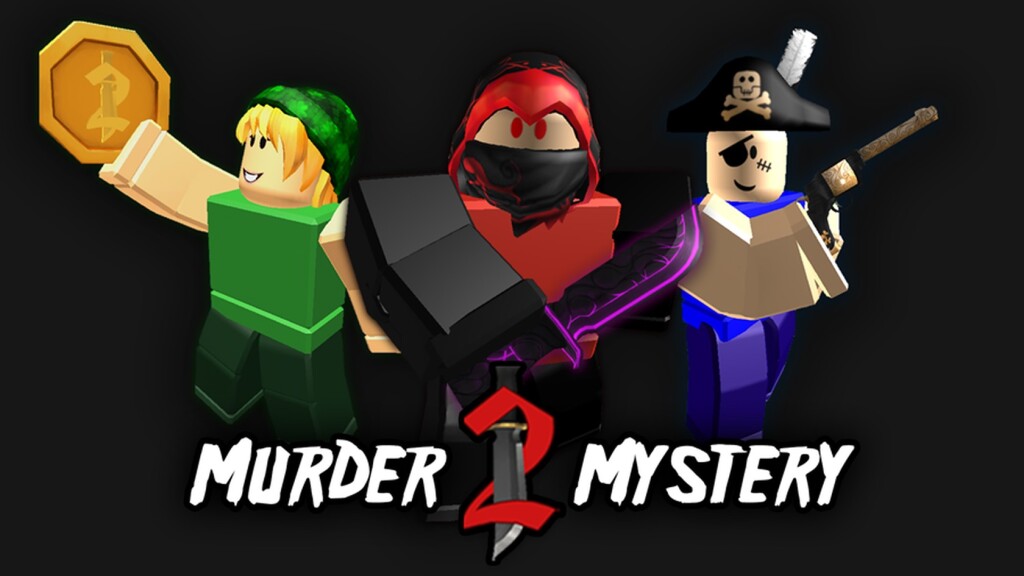
The headline is the top of the table. steal-an-egg holds 1,212,468 concurrent players and murder-mystery-2 holds 1,209,560. The difference is 2,908 people, or 0.24% — close enough that the ordering is effectively a tie and would likely flip on the next sync. It is worth saying plainly that a gap this small carries no information about which game is bigger in any durable sense.
What the pair does show is concentration. Together they account for 2,422,028 of the 5,693,883 concurrent players across all 72 synced games, which is 42.5% of the entire directory's live population. Extend to the top ten and the figure is 4,117,047, or 72.3%. Fourteen per cent of the games hold roughly 72% of the people playing right now.
The third and fourth columns of the table above are the interesting part, because they do not correlate. steal-an-egg leads on concurrent players with 9,192,723,197 lifetime visits, while brookhaven-rp has accumulated 88,826,504,075 visits — 88,826,504,075 in total — and sits at 439,019 concurrent. A game can therefore be the most-visited title in the directory and not be in the top two by current population.
The mechanism is not mysterious. Visits are a lifetime counter that only ever increases, so a game that was enormous three years ago keeps its entire historical total regardless of what it looks like today. Concurrency is a snapshot. The ratio between them is the cleanest single measure of whether a game's audience is current or historical, and the visits-per-concurrent-player breakdown ranks the whole directory on exactly that.
The fifth column disagrees with both. Rivals, at position five by concurrency with 209,281 players, holds 95,689,324 favourites — the second-highest total in the directory and far more than any game above it. Favouriting is a bookmarking action, not a play action, so it measures intent to return rather than presence. A game that people favourite heavily but play in smaller numbers at any given moment is a game with a large registered audience spread across time zones and schedules.
This is why the directory maintains separate rankings rather than a composite score. The favourites-per-concurrent-player view makes the divergence explicit by dividing one by the other, and the resulting list shares almost no members with the table above.
The top ten is not evenly distributed across categories. The roleplay category in this directory contains five synced games with 1,787,147 concurrent players between them, a figure dominated by a single entry near the top of this table. The simulator category spreads its 441,018 players across eight games. Small categories produce unstable rankings: with two games each, the obby and shooter categories move dramatically on a single game's swing.
For a practical read on which of these suits playing with other people rather than alone, the multiplayer-oriented breakdown uses the same concurrency figures but filters for games where population actually changes the experience.
The composition of the top ten is worth stating explicitly, because it constrains how much the ranking can generalise. Five of the 72 synced games sit in the roleplay category and eight in simulator, and between them they supply most of the upper half of the table. Obby and shooter have two synced games each, so their representation here depends entirely on whether those individual titles happen to be busy on the day.
That imbalance is a property of the directory rather than of Roblox. Categories with two members produce rankings that swing hard on a single game's movement, and any conclusion drawn from their position in a top-ten list is really a conclusion about one game. It is also why the category-level totals quoted elsewhere in this directory are more trustworthy for simulator, with eight members, than for obby or shooter with two.
The bottom of the same ranking is instructive. The least-populated synced game at this sync has 127 concurrent players, against 1,212,468 at the top — a factor of roughly 9,547. Several of the games at that end carry very large lifetime visit counts, which is the same cumulative-counter effect described above running in the opposite direction: enormous historical audience, almost nobody present.
Neither end is a verdict on quality. Concurrency measures presence, and presence is a function of time zone, release cycle and whether a game has had a recent update as much as of anything else. Treating the top of this table as a best-games list is the single most common misreading of it.
Three practical readings, in decreasing order of reliability. The most reliable is the total: 5,693,883 concurrent players across the directory, which tells you the platform's scale as measured by this sample and is stable enough to quote. The second is membership in the top ten, which is reasonably robust — a game does not usually enter or leave this list between syncs on noise alone.
The least reliable is the ordering within it. Ranks three to ten are separated by tens of thousands of players on figures that move by more than that between synchronisations, so the precise sequence in the middle of the table should be treated as approximate. The gap at the very top is a genuine exception worth noting explicitly: 2,908 players between first and second is small enough that the two should be read as tied.
The volatility is not a defect in the data. Concurrent players is a snapshot of a quantity that varies by hour and by day, so any ranking built on it is a ranking of moments. The directory maintains the cumulative fields precisely so that readers who want a stable ordering have one available — visits and favourites change far more slowly, and the most-visited ranking is the version to use when you want an ordering that will still hold next week.
These are stored values from the directory's own synchronisation, not live telemetry. The 72-game sample excludes 21 further titles present in the directory that have not yet returned a complete set of statistics; they are omitted rather than scored at zero, so the totals here are complete for the synced set and silent on the rest. Concurrency figures move substantially between syncs, and the top of this table in particular should be treated as a snapshot rather than a standing ranking.