


Picking a game for a group sounds like a taste question, and mostly it is — but there is a hard logistical constraint underneath it that people discover the annoying way. To play together you need to end up in the same server, and how easy that is depends almost entirely on how many servers exist and how full they are. Live concurrency is the best available proxy for that, and this directory syncs it for 68 games at the same instant, which makes the comparison meaningful.
The eight busiest games in the synced set hold 2,061,453 concurrent players between them. That is 65.6% of every live player across all 68 games. Practically, it means if you pick from this list you are picking from where the crowd already is.
| Game | Playing now | Lifetime visits | Favourites | Approval |
|---|---|---|---|---|
| steal-an-egg | 776,312 | 8,983,479,052 | 8,403,315 | 91.81% |
| murder-mystery-2 | 575,945 | 31,549,640,841 | 24,602,294 | 90.82% |
| brookhaven-rp | 228,859 | 88,766,331,279 | 30,607,426 | 85.89% |
| steal-a-brainrot | 110,482 | 74,084,108,835 | 29,594,322 | 85.13% |
| blox-fruits | 98,795 | 65,052,235,265 | 20,108,318 | 92.29% |
| 99-nights-in-the-forest | 97,138 | 30,180,438,599 | 10,006,052 | 90.49% |
| rivals | 88,973 | 18,875,400,363 | 95,512,940 | 93.66% |
| sky-assassin-jujutsu-shenanigans | 84,949 | 7,695,685,304 | 3,141,623 | 86.17% |
Servers have a capacity ceiling. When a game is busy, the platform is running many server instances, and there is almost always an empty slot somewhere to place a joining party. When a game is quiet, there may be three servers running with eleven people between them, and joining as a group of four can be genuinely difficult.
This is why the same game can be delightful with friends at eight in the evening and impossible at four in the morning, with nothing having changed about the game itself. The concurrency column is a snapshot, and it is the snapshot that matters for this particular question.
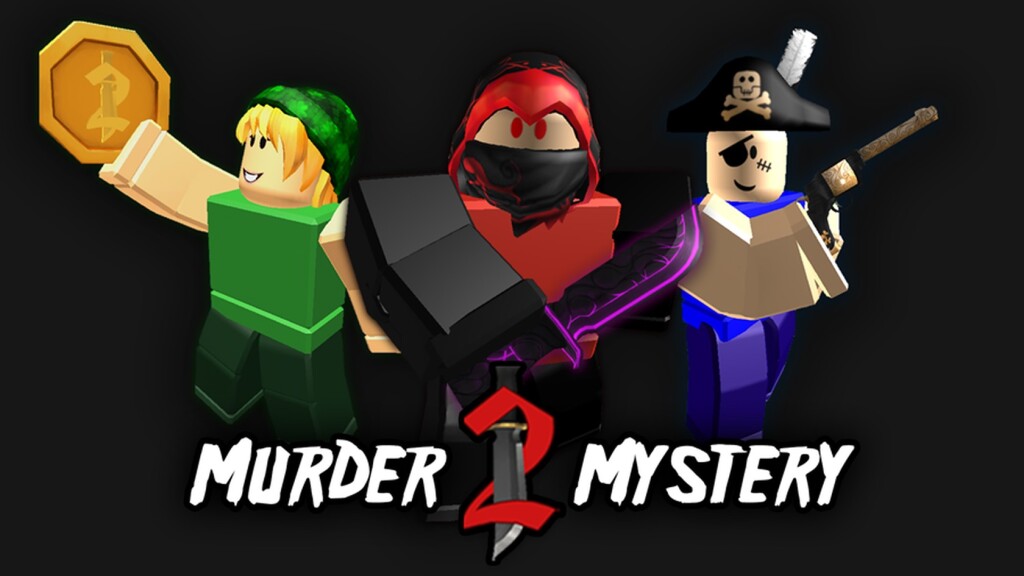
steal-an-egg leads with 776,312. murder-mystery-2 follows at 575,945, which is a notable move upward from the previous sync — this is now the second-busiest game in the directory, ahead of brookhaven-rp at 228,859. For group play, anything in the high five figures essentially guarantees you will find a server with room.
There is a real case for going the other way, and it is worth stating rather than glossing over. A game with a very large live population is also a game with a lot of churn: you will be matched with strangers constantly, the social layer is thin, and coordination with your own group is harder even though joining is easier.
Look at the bottom of the same list. work-at-a-pizza-place has 2,809 concurrent players and 5,617,702,832 lifetime visits. jailbreak has 4,062 playing against 18,687,017 favourites — the tenth most-bookmarked game in the directory. In a game that size, if four of you join, you may well be most of the server. For some groups that is the entire appeal.
The trade-off is real and it is not resolvable from the numbers: busy means easy joining and thin social fabric, quiet means harder joining and a much denser one. Know which you want before you sort.
First, check the approval split, not the average. rivals scores 93.66% on 11,565,202 votes, one of the highest rates in the directory, which is a reasonable signal that people who tried it stayed broadly happy. Compare barrys-prison-run-obby, which leads the whole directory on favourites but scores 60.65% on 671,389 votes — a divided active audience is a bad bet for a group night.
Second, check lifetime visits against concurrency. A game with a lot of history and a modest live population usually has established guides, settled communities and stable mechanics — you will not arrive to find it changed fundamentally since your friend last played. A game where both numbers are small is a genuinely unknown quantity.
Third, check whether the game is on a genre page at all. This directory exposes four working genre pages, and games not listed on any of them cannot be browsed by category here — you have to arrive via the ranking or a direct link. That is not a quality signal, but it does affect how easily your group will find related things to play afterwards.
If the group cannot agree, pick a genre rather than a title. Shooter is the smallest category here with 2 synced members, and both of them — rivals at 88,973 and arsenal at 2,840 — are competitive rather than cooperative, which suits groups that want to play against each other. Simulator is the largest with 8 members and is mostly parallel play: everybody in the same server doing their own thing, which suits groups who want to chat while playing. Start from the shooter genre page for the first and the Rivals code page for what is currently listed against the busiest of them.
One more use of the concurrency column is worth spelling out, because it is the question groups actually have and the answer is more specific than "bigger is better". What you want is not the largest possible game; it is the smallest game that reliably has room for your party. A game with 776312 concurrent players has room, obviously. But so does almost anything in the high four figures, and those games are much easier to coordinate inside.
Work down the list with this in mind. steal-a-brainrot at 110,482 and 99-nights-in-the-forest at 97,138 both have vastly more open capacity than any group will need, with correspondingly more competition for attention. evade sits just outside the top eight at 45,517 concurrent with 9,352,743,453 lifetime visits — comfortably large enough that joining is never a problem, small enough that a group of four is a meaningful fraction of a server.
A useful rule of thumb from this data set: below roughly 3,445 concurrent, start expecting to wait or to be split; above roughly ten thousand, stop worrying about capacity entirely and pick on preference. Everything between those bounds is a judgement call, and within it the lifetime-visits column is the better tie-breaker — it tells you whether the game has been around long enough for your group to find guides and settled communities when they get stuck. For the derived view that separates those two cases, the favourites-per-player ranking computes it across the whole directory.
It cannot tell you whether a game supports private servers, parties or friend-joining at all. Concurrency tells you how many sessions are open, not how they are populated or whether the game will place your group into the same one. It also cannot tell you about voice chat, cross-platform support or age suitability. For the last of those, the parents guide to reading game numbers covers what the statistics can and cannot establish, and the previous busiest-servers piece shows how much this ordering moves between syncs. The companion live player ranking extends the list to ten.