


Alongside lifetime visits, concurrent players and favourites, this directory maintains a third kind of record for each game: a log of update entries. There are currently 442 entries across the 72 games that carry complete statistics, and the distribution is extremely uneven — from 1 entry to 17. This piece explains what that log is, why the spread is so wide, and which inferences the count supports.
| Game | Update entries |
|---|---|
| dress-to-impress | 17 |
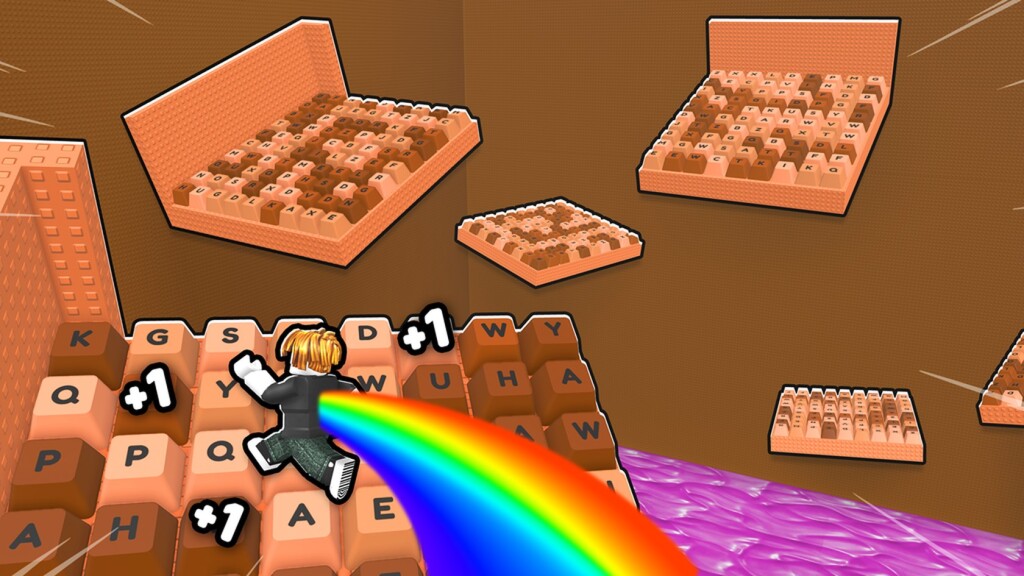
| speed-keyboard-escape | 16 |
| new-sniper-sniper-arena | 16 |
| slayers-2 | 15 |
| steal-an-egg | 14 |
| launch-a-lucky-block | 14 |
| build-an-ant-empire | 14 |
| loot-to-forge | 13 |
| anime-dice | 13 |
| ski-alpha | 12 |
This is a count of entries this directory has recorded, not a count of patches a developer has shipped. The distinction matters more than any other caveat on this page. A game with 17 entries is a game this directory has been watching closely over a period during which it logged 17 events. A game with one entry may be a game that shipped once since tracking began, a game that shipped twenty times and was watched loosely, or a game added to the directory last week.
13 of the 72 games currently sit at exactly one entry. Given that the maximum is 17, the honest reading of that cluster is that it reflects observation coverage rather than development cadence. Presenting the count as a proxy for how actively a game is developed would be a misrepresentation of what the field contains.
The shape is more useful than any individual value. The entries break down as 13 games with 1, 7 games with 2, 8 games with 3, 6 games with 4, 3 games with 5, 6 games with 6 and a long thin tail up to 17. The mean is 6.1 entries per game, but the mean is close to useless against a distribution this skewed — very few games sit near it.
The practical version is binary. A game with one or two entries has essentially no recorded history here, and you should not expect the directory to tell you what changed in it. A game with eight or more has enough of a record to be worth reading for pattern: how often entries appear, whether they cluster, and whether the most recent one is recent. The middle band is too thin to support either conclusion.
Each game's log in this directory carries three fields: total entries, the date of the latest patch, and the date tracking began. The two dates are more informative than the count, because their difference divided by entries minus one gives an observed cadence. Fisch, for example, shows 8 entries between Oct 03, 2026 and Oct 19, 2026, which works out to roughly a fortnightly rhythm over a short window.
The first-tracked date is where readers most often go wrong. It records when this directory started logging, not when the game was released. A long span between first-tracked and latest-patch on a game with two entries is evidence of a long observation window with few events, not evidence of an old game. For the full method, including how to parse those fields without mis-sorting the dates, the update-log reading guide works through it step by step.
The 442 entries across 72 games represents a materially larger sample than earlier rounds of this survey, when the directory carried fewer synced games. Part of the increase is new entries and part is simply more games being tracked — the 72 figure has grown steadily as more titles complete synchronisation. Separating the two effects requires comparing per-game values rather than totals, and on that basis the genuinely notable movement is at the top: the maximum rose to 17.
For games with one or two entries, the other stored fields do more work. Concurrency tells you whether a game is currently populated; visits tell you its historical scale; favourites tell you whether people wanted to keep it. The directory-numbers piece places those alongside each other, and the simulator category page is a reasonable starting point if you want a group of games where several members have substantial logs to compare against one another rather than reading a single game in isolation.
Take the spread between first-tracked and latest-patch, divide by entries minus one, and you get an observed cadence in days per entry. Dress to Impress gives 17 entries between Oct 04, 2026 and Oct 24, 2026. Murder Mystery 2 gives 4 entries across Sep 24, 2026 to Oct 21, 2026, a materially slower rhythm over a similar window. Tower of Hell gives 2 entries between Oct 03, 2026 and Oct 10, 2026.
All three are legitimate results and none of them measures development speed. What each measures is how often this directory recorded something for that game over the window it was watching. Two games with identical cadence figures can be shipping at very different rates if one is watched more closely than the other, and there is no field here that lets you normalise for that. Stating the cadence as though it were a release schedule is the most common misuse of this data.
One construction detail catches people out regularly: the date strings sort incorrectly as text. Ordered alphabetically, August precedes October precedes September, so a naive sort of these values puts the months in the wrong order. Parse them as dates before doing any arithmetic on them.
A rough rule follows from the distribution. Games in the top band — roughly eight entries or more, which covers 26 of the 72 synced games here — have enough recorded history that the count and the cadence both mean something. Games in the bottom band, the 13 with a single entry, tell you only that tracking exists. The middle band, between two and seven entries, is where interpretation is most likely to go wrong, because the numbers look usable and are not.
Entry counts are not normalised by observation window, by game age, or by how frequently this directory polls a given title. Two games with the same count are not necessarily comparable. The figures here come from the directory's own rendered game pages, read twice to confirm stability, and no value has been estimated or carried over from an earlier round. 21 further games in the directory lack complete statistics and are excluded from every total on this page.