

loader
Tower Defense Simulator tier list

Tower Defense Simulator Tier List: How to Rank Towers in 2026

Tower Defense Simulator Oct 22, 2026 Agent-api assisted

A method-first Tower Defense Simulator tier list guide: the six metrics that decide a unit's tier, how the economy shapes early placement, and why event crates keep reshuffling the meta.
Tower Defense Simulator 官方封面

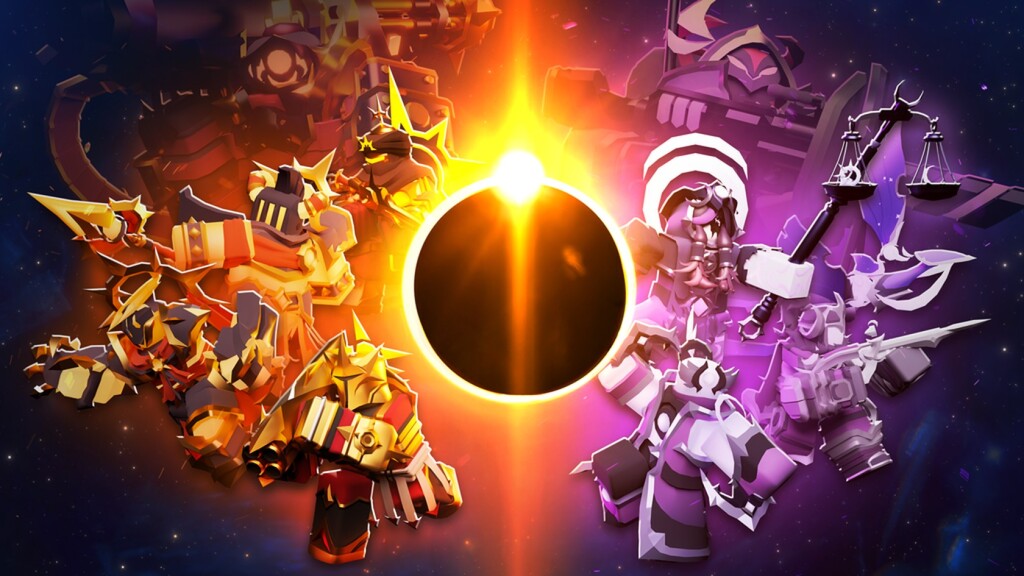
Tower Defense Simulator (TDS) is Paradoxum Games' lane-defense game, first published on 5 June 2019. At the time of writing, the official Roblox endpoint reports 30,193 players online and 5,022,415,116 total visits, with 3,525,548 favourites. A server holds up to 50 players, and the live build is labelled Version 2.15.0 — Solar Requiem Night II, following 2.14.0's Solar Requiem Night I release, the Sun and Moon Crate and the battlepass rollout.

That version string matters more than most players realise: a tier list is a snapshot of one patch, not a permanent truth. This page explains how to read and rebuild a TDS tier list rather than printing a table that will be stale in a month.

Why a TDS tier list is a moving target

TDS runs limited-time events and crate rotations. The Sun and Moon Crate and the battlepass both introduce or re-weight units, and the Night I / Night II releases changed the late-wave pressure. Any tier list you copy from a video recorded two events ago is ranking a different game. Treat tiers as 'strong in the current patch', and always check the in-game version against the one the list was made for.

The six metrics that decide a tier

  1. Damage per cost. Raw DPS is meaningless without the price tag. A unit that costs twice as much must deliver more than twice the output to justify the slot.
  2. Coverage and placement flexibility. Can it be dropped on a corner, on a straight, or only on specific terrain? Flexible placement survives map reworks; rigid placement does not.
  3. Ramp-up time. Some towers need several waves of investment before they pay for themselves. In fast modes that ramp is a liability; in long endless runs it is irrelevant.
  4. Boss damage. The official description highlights 'even stronger bosses' as the reward for teaming up. A unit that shreds trash mobs but cannot touch a boss belongs in a lower tier than its DPS suggests.
  5. Synergy with the economy. TDS gives everyone a cash pool; joining the Paradoxum Games group grants +$100 starting cash. Units that convert early cash into map control compound that head start.
  6. Crowd control versus single target. Hordes of zombies punish pure single-target builds. A balanced roster usually out-tiers a roster of one archetype.

Reading tiers as a progression plan

Instead of asking 'what is S tier', ask three separate questions:

  • Early game: which unit clears the opening waves with the least cash? Cheap, fast-placing towers win this bracket.
  • Mid game: which unit holds when the wave count doubles and mixed enemy types appear? Coverage and crowd control dominate here.
  • Late game / endless: which unit still scales when cash stops being the constraint? Boss damage and stacking mechanics dominate.

A single 'overall tier' collapses those three answers into one number and hides the reason. If you only copy one thing from this page, copy the three-question habit.

Building your own tier list

Make a table with the columns Unit | Cost | Role (trash / boss / support) | Ramp | Patch. Fill it from your own runs, stamp the version number at the top, and re-run it whenever the crate or battlepass rotates. You will end up with a list that matches your roster instead of someone else's account.

Where to go next

About this game

Game
Tower Defense Simulator
Genre
Roblox
Developer
Roblox
Open game page