

There is no site-wide way to count codes on this platform. The public interface accepts code submissions; it does not expose an aggregate, so any figure claiming to describe "the number of codes in existence across Roblox" is invented. What is available is the honest, narrow version: one game, its own page, counted directly. This piece does that for a single game and explains why the result is more useful than an aggregate would be.
This game currently shows 1 working code and no retired entries. Its page renders 1 row in total. That is the whole list, read directly from the page rather than from a summary.
For context, the game carries 5,621,620,097 all-time visits, 3,826 concurrent players, 13,636,938 favourites and a 92.9 per cent approval rate, with 5 logged update entries.
So this is not an obscure title. It is a game with a very large history, a modest live population, and one working code. That combination is completely normal, and understanding why is the point of this piece.
Across the 85 games tracked here, 22 have any working codes at all and 63 have none. Of those 22, 16 — the majority — have exactly one. The largest single list in the directory belongs to Blox Fruits with 24, and that is the outlier, not the rule.
A code is a marketing instrument with a short shelf life. It is released to mark something — an update, a milestone, a collaboration — and it is retired when the moment passes. A game that ships continuously will tend to have one or two live entries rotating, not a permanent catalogue. A game with nothing to announce has none at all.
Which means the length of a list is a signal about release cadence, not generosity. The useful question is not "how many codes does this game have" but "has this list changed recently" — and that is exactly what a dated page lets you answer and a scraped aggregator does not. a different single-game case study reaches the same conclusion from a different game.
The absence of an expired section is worth naming, because it is the thing players report as suspicious. A list with no retired entries usually means one of two things: the codes genuinely have not expired yet, or expired entries are removed rather than archived. Neither is deceptive, and neither requires an explanation involving generosity or its absence.
why codes expire and how to spot a dead list covers expiry mechanics in detail. The practical summary: a code with no published expiry can stop working at any time, and a code that stopped working last week will usually be gone from a maintained list rather than struck through on it. A short, current list is a sign of maintenance. A long list with retired entries still attached is a sign of a page nobody is curating.
It is worth stating the inverse case explicitly, because it is the practical test. A long list of supposedly working codes for a single game is almost always one of three things: a list that includes codes for other games, a list that has not been checked in months, or a page designed to attract clicks rather than to help anyone.
The failure mode is easy to spot once you know what to look for. Real codes are short, alphanumeric, and specific to one game. A page listing forty of them, mixing games, with no dates and no indication of when anything was last tested, is not a resource. It is also, not coincidentally, one of the most common ways players are led to enter credentials somewhere they should not.
So the practical rule is a length check plus a date check. Under five entries and a recent verification date is credible. Dozens of entries and no date is not. Everything in between deserves a look at when the page was last updated before you trust it.
And one thing the count genuinely cannot tell you: what the code gives. A directory page records that an entry is live, not what redeeming it produces, and the two are worth separating before you spend time on one. Check the reward on the game's own page, and treat any claim of a large payout with the same suspicion you would apply to the list length itself.
None of this is an argument against codes. They are a perfectly good way to get a small bonus in a game you already play. It is an argument against treating the length of a list as information about the game, when it is really information about the page.
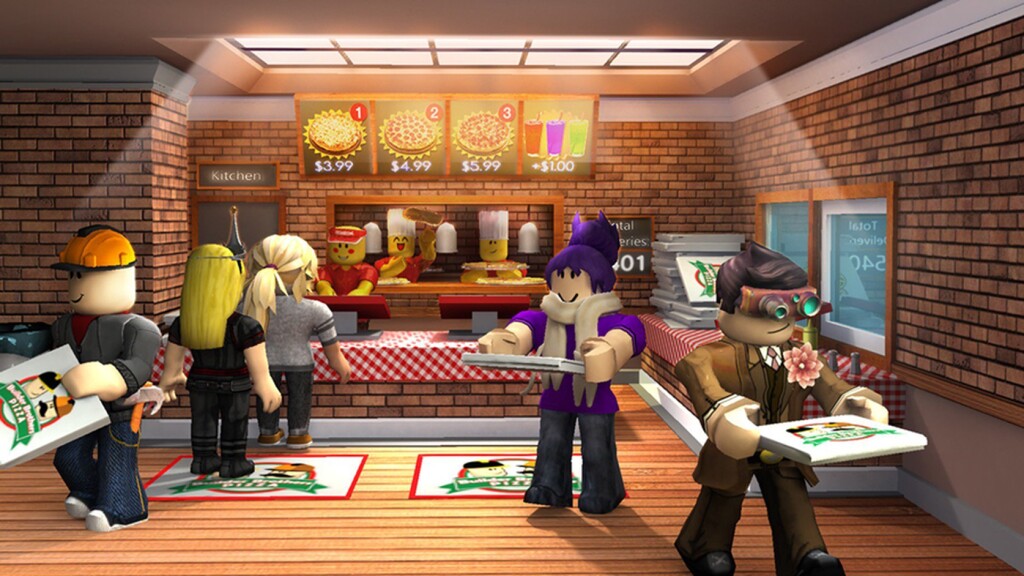
the Work at a Pizza Place code page is the page this count came from. Open it and count the rows; if the number differs from what an aggregator claims, the aggregator is stale. how code lists are verified before publication sets out what verification involves, and the short version is that a code claim is only worth anything if it was tested recently and the test is dated.
Then apply the rule that defeats most of the rest: never enter credentials anywhere that is not the platform itself. A code does not need your password, and no legitimate offer expires in ten minutes. the mistakes new players make reading this data covers the reading errors that surround this, including the assumption that a longer list means a better game.
One last framing point. This game ranks 4 in the directory by favourites per concurrent player — a measure of how heavily it is saved relative to its live population. That gap is the reason a game can have an enormous history, a quiet present and a single working code, and all three of those facts be perfectly consistent.
the roleplay genre page shows the category this game sits closest to; the directory does not assign it to a genre page, so treat that as a pointer to comparable games rather than a claim of membership.