

Divide a game's all-time visits by the number of people playing right now and you get a number with no units and considerable meaning. It is a rough measure of how much history each current player represents — how thinly a game's past is spread across its present. High means a game people have visited a great deal and now visit rarely. Low means a game whose traffic is happening now.
| Game | All-time visits | Playing now | Visits per player |
|---|---|---|---|
| MeepCity | 16,279,228,236 | 107 | 152142320 |
| Tower of Hell | 29,308,825,778 | 12,503 | 2344143 |
| PLS DONATE | 5,258,974,573 | 2,805 | 1874857 |
| Grow a Garden | 35,998,262,912 | 23,251 | 1548246 |
| Arsenal | 6,324,354,549 | 4,179 | 1513366 |
| Work at a Pizza Place | 5,621,620,097 | 3,826 | 1469320 |
| Jailbreak | 8,083,299,809 | 5,691 | 1420365 |
| [LEGACY] Toilet Tower Defense | 6,201,356,513 | 5,103 | 1215237 |
| Launch a Lucky Block | 6,873,660 | 1,037 | 6628 |
| Ball VS Ball | 175,687,373 | 27,417 | 6408 |
| Huss Valley | 221,489,742 | 40,365 | 5487 |
| Build An Ant Empire | 30,188,888 | 7,203 | 4191 |
| Anime Dice | 151,729,939 | 61,131 | 2482 |
| [] Adopt Me! | 728 | 65,311 | 0 |
MeepCity is the extreme case at roughly 152142320 visits for every person currently in a server: 16,279,228,236 visits against 107 concurrent players. That is a game with an enormous past and an almost empty present.
At the other end, Anime Dice shows about 2482 visits per concurrent player — 151,729,939 visits against 61,131 people playing. That is a game whose traffic is overwhelmingly current, with very little accumulated history behind it. Both are real; they are just different ages.
The middle of the board is more informative than either end. [⭐SZN 10] Dragon Adventures sits near the median at roughly 190888 visits per concurrent player, which is the shape of a game with a substantial history and a live population that has kept pace with it.
First, and most often, it means the game aged. the MeepCity case study walks through the clearest example in this directory: a title whose visit count says it was once among the largest on the platform, and whose concurrent count says that era has passed.
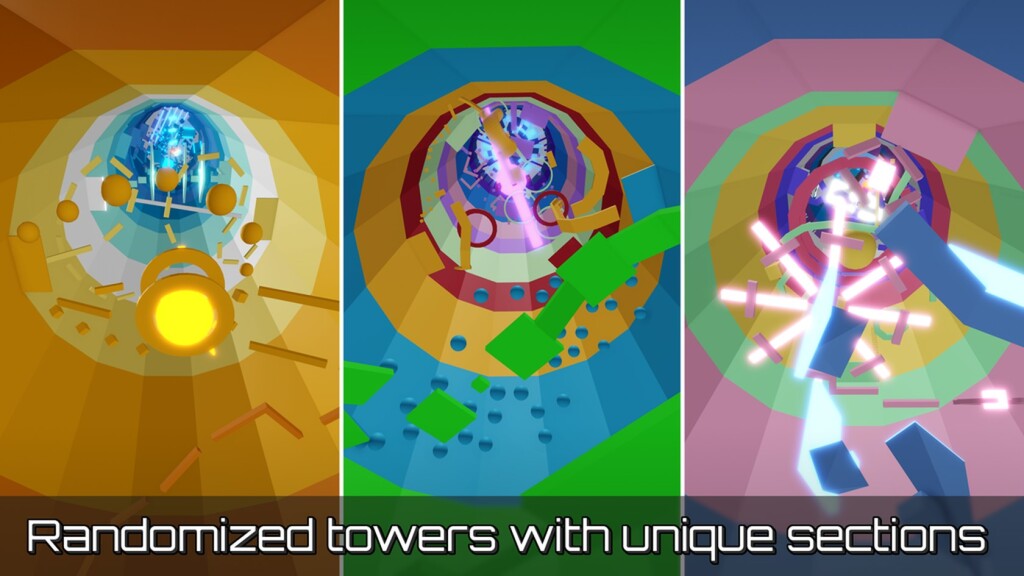
Second, it can mean the game is short. A game that people play in brief bursts accumulates visits quickly relative to how many are inside at once. Tower of Hell is the canonical case here: 29,308,825,778 visits against 12,503 concurrent players, a ratio of about 2344143. Every visit is a run that ends, so visits pile up faster than occupancy does. This is a structural property, not a decline.
Third, it can mean a broken record. [] Adopt Me! reports 65,311 concurrent players against a visit figure so small that the resulting ratio is effectively zero. That is not a game with no history; it is a field that did not sync. We publish it because it is what the source returned, and we flag it so nobody reads it as fact.
It says nothing about session length, because a visit is counted however long someone stays. It says nothing about how many distinct accounts are involved — one person with fifty visits and fifty people with one each produce the same numerator. And it says nothing about time of day: this snapshot was taken at one moment, and concurrency swings hard between a weekday afternoon and a weekend evening.
Those limits are why the ratio belongs next to other columns rather than on its own. Read it with favourites and approval and you get a real picture: a high ratio with high favourites is a beloved older game, while a high ratio with low favourites is one that has genuinely been left behind.
The most important thing that changed since the last version of this board is not any individual game. It is the denominator: the set of games carrying a complete statistics set grew from 79 to 85. Six more games entered the measurable pool, and none of them arrived at the top of the visits table — they mostly arrived near the bottom, with modest histories and modest concurrency.
That matters because a ranking built on a ratio is sensitive to the shape of the tail rather than the size of the head. Adding six moderate games barely changes the total visits across the directory, which is dominated by a handful of titles in the tens of billions. What it does change is the median, the quartile boundaries, and therefore where any given game sits relative to the field. A game can move several places without a single one of its own numbers changing.
This is why we publish the absolute figures alongside every ratio. If you only read the ranking column you will attribute movement to a game that did nothing; if you read the visits and concurrency columns you can see immediately whether a game actually changed or whether the field around it did. The discipline of checking membership before counts applies to rankings too: ask which games entered the sample, not just how many.
If you are looking for a game with people in it, sort by concurrent players and ignore this column. If you are looking for a game with a deep back catalogue and a quiet present, sort by ratio descending — that is where the nostalgia lives, and the quietest servers by live players is the companion read on the quietest servers overall.
Comparing against the October 27 version of this board shows how fast this board turns over. Every figure moved in the space of days, mostly because the sample grew: 85 games now carry a complete statistics set versus 79 when that piece was written. A bigger denominator reorders everything at once, which is the single most important caveat on any ranking built from this data.
the longer explanation of what the ratio reveals covers the ratio's mechanics in more depth; the obby genre page shows the category where short-session games concentrate; the Tower of Hell code page is a concrete example of a game whose ratio is high for structural reasons rather than because it declined.