

Roblox scams are not randomly distributed. They concentrate wherever there are many players, many items worth wanting, and many people who do not yet know how the trading economy works — which in practice means they concentrate on the games at the top of every popularity list. This directory currently carries 3,292,469 concurrent players across 62 games with a complete record, and the distribution of that population is what determines where the risk sits.
The mechanism is worth understanding before the specifics, because almost every scam variant is the same trick wearing different clothes: get a player to perform an action outside the system that is supposed to protect them. Trade outside the trade window, log in somewhere that is not the official login, accept a "free" item that requires credentials, or hand over something valuable first with a promise of something better afterwards. In every case the protection exists and the scam consists of talking someone out of using it.

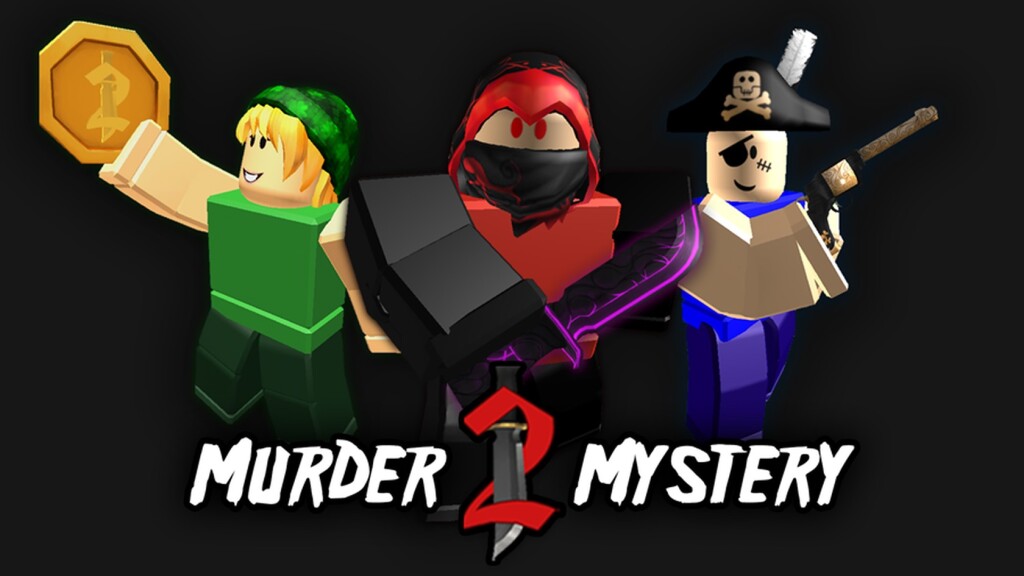
Steal an Egg alone carries 933,844 players online. Murder Mystery 2 carries 313,392 and Brookhaven 253,660. Behind them, 99 Nights in the Forest sits at 125,448, Blox Fruits at 120,556 and RIVALS at 117,961. Those six games account for a substantial share of everyone currently playing something in this directory.
Concentration is the entire risk model. A scammer operating in a game with 933,844 people in it has a pool that refills continuously; one operating in a game with a few hundred players exhausts it quickly. The games at the top of any concurrency ranking are therefore, mechanically, the most attractive places to work — not because their players are more gullible but because there are simply more of them, and more of them are new.
RIVALS makes a useful second case because it shows that concurrency is not the only draw. It carries 117,961 players online but 95,273,809 favourites — by a wide margin the most-bookmarked game in the directory, at roughly 808 favourites for every person currently in it. Games with that profile attract a different kind of attention: cosmetic and account-value scams aimed at people who have invested in a game they expect to keep playing.
The external trade. Someone offers something valuable and asks you to complete the exchange "off-platform" — a different game, a direct drop, a trusted middleman arrangement. Roblox's trade window exists so both sides can see exactly what is being exchanged before confirming. Any proposal that requires splitting a trade into two separate one-way transfers is removing the only safeguard in the system, and the reason is always the same.
The free Robux offer. Robux is generated by purchasing it or earning it through official channels. There is no mechanism by which a third party can add currency to your account, so any page, game or person claiming to do so is asking for credentials or account access in exchange for nothing. The same applies to "Robux generators", which are credential-harvesting pages with a progress bar. Our breakdown of what Robux buys and what to avoid covers the mechanics in more detail.
The impersonation. A account resembling a developer, a moderator or a well-known player offers a giveaway, a verification or a refund. The tell is always the same: a legitimate process never requires you to hand over account details. Impersonation works at scale in exactly the games listed above because in a population of 313,392 people nobody can verify who anyone is.
The item-value mismatch. Particularly in trading-heavy games, a scammer offers something that looks equivalent but is not — the wrong variant, a cosmetic without the effect, an item whose value collapsed in a recent update. This is the hardest of the four to defend against because nothing is being stolen; you agreed to the trade. The only real defence is checking current values before confirming, which is what the longer guide to how these scams work walks through in detail.
Every one of the games listed above is a large, established experience with a rotating population of first-time players. Those players are the target because they do not yet know what a legitimate trade window looks like, they do not know what items are worth, and they have not yet learned that an unsolicited offer is itself the warning sign. In a directory where 31 of 93 games carry no statistics at all, there is also a large set of smaller experiences where the same tricks operate with less scrutiny.
This is where parents have the most leverage. The games that matter are not the obscure ones — they are the half-dozen titles at the top of any concurrency list, because those are where the population is. The roleplay genre page collects several of them in one place precisely because they are the games new players arrive at first, and the parent's safety guide covers the conversation in more depth.
Murder Mystery 2's full per-game record, including everything the directory holds about it, is at the Murder Mystery 2 codes page — worth checking what a legitimate game page looks like before you encounter one that is not.
This directory holds statistics, not incident reports. There is no field here recording where scams occurred, and no article on this site should be read as measuring scam prevalence by game. What the data does establish is the population distribution — where the players are — and that is sufficient to reason about exposure, because exposure scales with population. A game with 933,844 people in it offers a larger working environment than one with a few hundred, in the same way a crowded street offers more opportunities for pickpockets than an empty one.
What it cannot establish is that any specific game is unsafe. The games listed here are popular because they are good, and their popularity is the only thing that makes them targets. The correct conclusion is about behaviour, not about games: keep trades inside the trade window, never enter credentials anywhere that is not the official login, treat unsolicited offers as hostile by default, and check item values before confirming anything irreversible.
Scams follow population. The six games listed above hold a large share of the 3,292,469 players currently visible in this directory, and that concentration — not any weakness in the games or their communities — is what makes them the productive places to target. Defending against it does not require avoiding popular games; it requires understanding that the protection is the trade window, the official login, and a moment spent verifying a value, and that every scam works by persuading you to skip one of those three.