

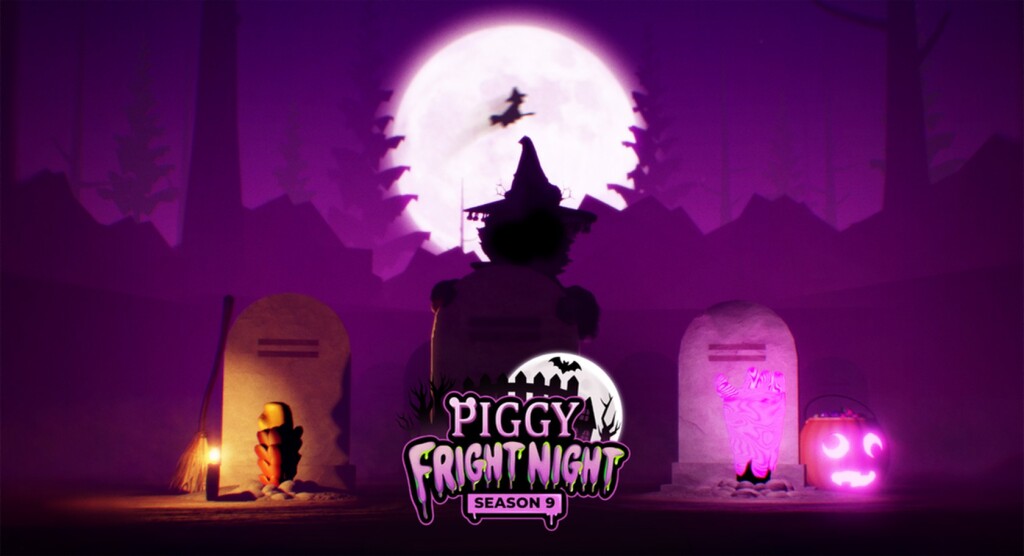
One working code. That is the entire current state of the list for Piggy [SEASON 9 - FRIGHT NIGHT], a game with 14,445,659,756 lifetime visits, 12,290,712 favourites and 15,412 people playing at the time of this measurement. It sounds thin until you set it against the rest of the directory, at which point it turns out to be the single most common shape there is.
| Measure | Value |
|---|---|
| Working codes | 1 |
| Rows rendered | 1 |
| Retired entries shown | 0 |
| Concurrent players | 15,412 |
| All-time visits | 14,445,659,756 |
| Favourites | 12,290,712 |
| Approval rate | 90.33% |
| Tracked update entries | 11 |
Every row on the page is live. There are no struck-through entries, no retired section, nothing marked expired — the page currently renders 1 row and all 1 of it works. That is not a claim that no code has ever stopped working; it is a statement about what this site shows. A retired code is removed rather than archived, so the list you see is always the set that works right now.
Across the 87 games in this directory that carry a full statistics set, 23 publish any code list at all and 64 publish none. Of the 23 that do, 17 publish exactly one working code and 6 publish more than one. So a single-entry list is not an abbreviated version of a proper list — it is the most common form a code list takes here, and Piggy [SEASON 9 - FRIGHT NIGHT] is in the majority.
The reason is straightforward. A code is issued to mark something: a milestone, an update, a collaboration, a compensation window. When the moment passes the code stops working and is taken down. A game that issues codes one at a time and retires them one at a time will, at almost any instant, show exactly one. A game that runs several concurrent campaigns shows more, and in this directory only 6 games are doing that. Everything above two codes is the exception rather than the rule.
The comparison that makes the number legible is with the extremes. Blox Fruits publishes 24 working codes against 293,973 concurrent players, and is the clear outlier — no other game here is within an order of magnitude of it. DOORS publishes 1 against 36,087 players and 7,986,955,766 visits, which is the same shape as Piggy [SEASON 9 - FRIGHT NIGHT] on a slightly larger live population. All three games are busy. What differs is how many concurrent campaigns they are running, not how popular they are.
Piggy [SEASON 9 - FRIGHT NIGHT] itself sits at rank 11 by all-time visits, rank 18 by favourites and rank 43 by concurrent players. It is a large, well-liked, actively played game. Its approval rate of 90.33% is above the directory average of 89.61%. None of those figures is consistent with a game that neglects its players, which is the usual conclusion people draw from a short code list — and none of them is evidence about codes either way.
The value of a code is not proportional to how many are on the page. A single code that grants a substantial item is worth more than five that grant trivial ones, and the directory does not measure what any of these codes actually give you. The only thing the length of a list tells you is how many concurrent promotions the game is running. Reading it as generosity is a category error, and it is the single most common misreading of this data.
There is also a maintenance argument running the other way. A list that is not kept current is actively worse than a short list, because a player who arrives expecting a reward and finds a dead string has a worse experience than one who finds a single working code. Constraining the list to what currently works is the more honest editorial choice, and it is what produces the shape above across the whole directory: 0 retired entries are shown anywhere.
Three things. First, confirm the game has a statistics sync — this directory tracks 93 games and 87 of them carry a complete set, so an absence of figures usually means a pending sync rather than an absence of data. Second, read the live count rather than counting rows by eye, because the page states it directly. Third, compare against the directory distribution before drawing a conclusion about the game: 17 of 23 lists have one entry, so the baseline is one.
For the other end of the range, the Blox Fruits code page shows what a large concurrent campaign set looks like, and the case study on that list works through why it is an outlier. Doors is the closest like-for-like comparison to this game, and the directory-wide code survey covers the full distribution. Piggy [SEASON 9 - FRIGHT NIGHT] is not carried on any of the four genre pages this site publishes, so the nearest category comparison is the roleplay page.
The live count on a code page is rendered by the site rather than derived, so the number quoted above is what the page displays, not a count of visible rows performed by hand. Each game page in this survey was read twice in separate requests and only used where the two readings agreed, because a page that is mid-rebuild can return different values on consecutive loads. The 1 above agreed on both readings. The statistics columns — visits, favourites, concurrent players, votes — come from the platform sync that this directory runs daily, and the values here are from the most recent one.
One boundary is worth stating plainly: there is no endpoint on this site that returns code data in machine-readable form, so no directory-wide aggregate can be produced except by reading each page. That is why this article reports one game in detail and cites the distribution separately, rather than quoting a single site-wide percentage as though it were a stored figure. The 23 games with codes and 55 working codes quoted here were each read individually.
A code list is a weak signal and should be weighted accordingly. It tells you that somebody at the game is currently running a promotion, which is one fact among many. It does not tell you how generous the game is, how often it rewards players by other routes, or how healthy it is. Piggy [SEASON 9 - FRIGHT NIGHT] has 15,412 people in it right now and 14,445,659,756 lifetime visits, and those two numbers say considerably more about whether the game is worth your time than the length of its code list does. Treat the code page as a convenience, not as a review.