

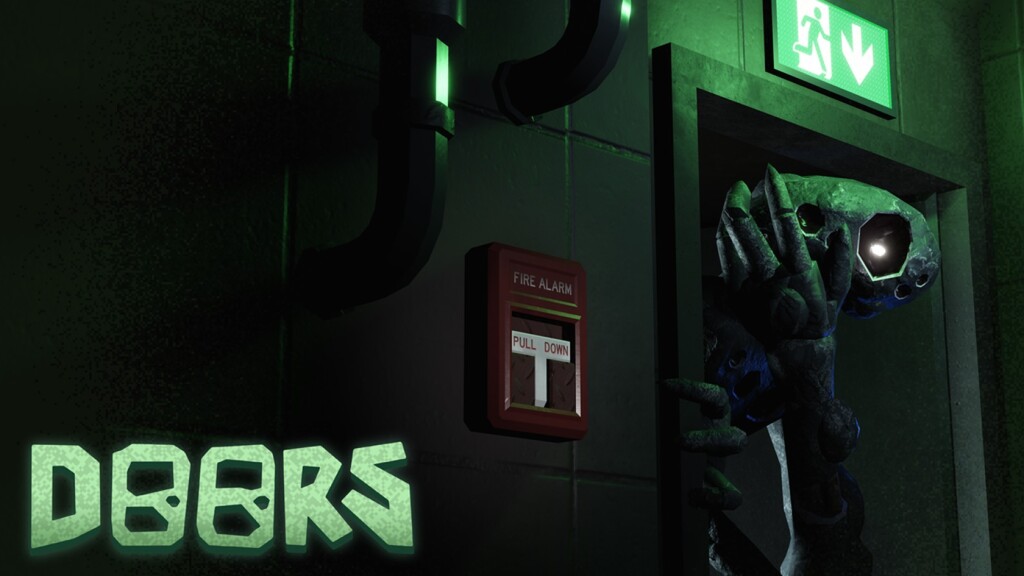
Doors is one of those games whose reputation is much bigger than its concurrent player count, and the directory's statistics explain exactly why. Doors currently holds 7,879,274,997 lifetime visits, 20,804 players online, and 8,278,925 favorites. Those three numbers, read together, describe a game with an enormous accumulated audience that plays in bursts rather than continuously.
| Metric | Value | What it measures |
|---|---|---|
| Total visits | 7,879,274,997 | Every session ever started |
| Playing now | 20,804 | People in-game at this minute |
| Favorites | 8,278,925 | Players who bookmarked it |
| Upvotes | 4,740,071 | Positive ratings recorded |
| Downvotes | 355,473 | Negative ratings recorded |
| Tracked updates | 3 | Update entries on record |
The votes are worth a beat. 4,740,071 upvotes against 355,473 downvotes is a ratio of roughly 13.3 to 1 — well above the directory-wide aggregate of about 8.5 to 1. For a game with as much frustration built into its design as Doors has, that is a striking result, and it is the clearest single indicator that players who dislike Doors tend not to rate it at all rather than rate it badly.

Doors has 7.88 billion lifetime visits and 20,804 people playing at this moment. Divide one by the other and you get a visits-per-live-player ratio of roughly 378,000 — very high. Compare that with a game like Steal An Egg, which shows 8,112,224,934 visits against 903,547 playing now, a ratio near 9,000. The difference is not quality; it is session shape.
Doors is a run-based horror experience. You enter, you progress through a sequence of rooms, you die or you finish, and you leave. Each visit is short and discrete, and a single player can generate dozens of visits in an evening. Steal An Egg is a persistent economy you sit inside. Both games have nearly identical lifetime visit totals — 7.88 billion against 8.11 billion — and completely different live populations, because one collects visits and the other collects hours.
8,278,925 favorites against 20,804 concurrent players is a ratio of about 398 favorites for every person playing right now. That is a bookmark-heavy profile: players keep Doors on their list so they can return when there is something new to see. It also matches the update pattern — the directory holds 3 tracked update entries for Doors, and each one is the kind of event that pulls a dormant favorite list back into the game for a weekend.
This burst pattern is why you should never judge Doors by its live count on a random Tuesday. A game that spikes on content drops looks quiet in between, and Doors' 20,804 concurrent players right now is a floor, not a ceiling.
Horror games usually collect downvotes, because frustration and fear are adjacent feelings and a player who has just been jump-scared out of a run is not in a rating mood. Doors inverts that, and the explanation is in the vote columns rather than anywhere else in the dataset. 355,473 downvotes against 7.88 billion visits is a very small fraction of sessions ending in a negative rating — and the players who bounce off Doors appear to leave rather than rate.
Set that against Tower of Hell, the directory's most-divisive large game at 2.8 to 1 on 1,567,488 downvotes. Both games are built around failure. The difference is what failure means: in Tower of Hell the obstacle is the content and the player blames the level, while in Doors the obstacle is the run and the player blames themselves. That is a design distinction rather than a quality one, and the vote columns record it faithfully.
By lifetime visits Doors ranks eighth among the 41 fully-tracked games, behind Brookhaven RP at 88,547,516,910, Steal a Brainrot at 73,964,624,179, Blox Fruits at 64,959,746,460, Grow a Garden at 35,971,872,683, Murder Mystery 2 at 31,301,106,727, 99 Nights in the Forest at 30,053,792,148 and Tower of Hell at 29,158,572,008. By favorites it sits thirteenth, at 8,278,925, behind RIVALS' directory-leading 94,766,402.
The most useful comparison is with 99 Nights in the Forest, the other large horror-adjacent title in the set. That game shows 30,053,792,148 lifetime visits and 112,851 players online — roughly four times Doors' visits and more than five times its concurrency, but a similar gap between the two columns. Both are run-based. Both look quiet on a live leaderboard and enormous on a lifetime one.
Because Doors is run-based, the directory's per-run resources matter more than its persistent-game ones. Check the Doors codes page before you start; codes in run-based games are typically tied to content updates and expire quickly, and that page shows the current status of each one rather than a historical list. If Doors' pacing is not what you want and you would rather climb stages at your own speed, the obby games in the directory are the structural opposite — persistent levels, no run timer, and progression that carries. And for a broader look at which experiences reward playing together rather than alone, the directory's games to play with friends breakdown covers the co-op end of the catalogue.
Doors has 7,879,274,997 lifetime visits, 20,804 players online, 8,278,925 favorites and a 13.3-to-1 approval ratio on 4,740,071 upvotes against 355,473 downvotes. It is a large, well-liked, burst-play experience whose live count badly understates its reach. Read it as a game you return to, not one you move into — and read its live player number as a snapshot of a quiet moment, not a verdict.