

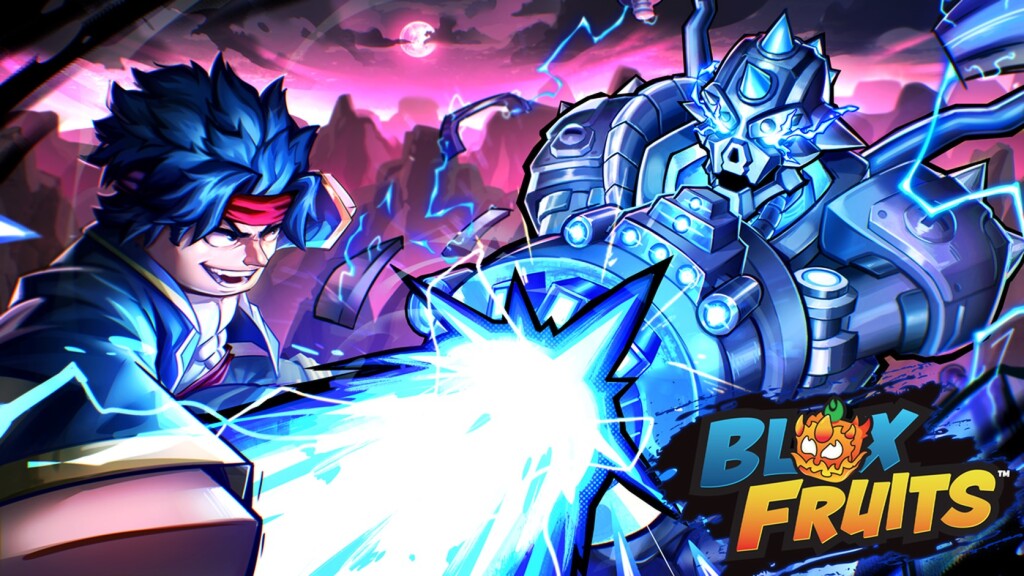
Blox Fruits is not a subtle game about its own structure. Its official description says it directly: "Level up in this anime RPG fighting game: Unlock powerful fruits or master sword skills to brave quests, explore islands, and start your high-seas adventure!" That sentence is also the Blox Fruits leveling guide in miniature — quests are the XP engine, islands are the content gates, and the fruit-versus-sword decision is the build fork that decides how the whole ladder feels.
With 65.0B visits and 96,690 players online, this is the most contested progression ladder on Roblox, and also the one with the most contradictory advice written about it. What follows separates what the game commits to from what the community merely prefers.
Everything else in Blox Fruits — fruits, swords, races, seas — modifies how efficiently you run quests. Quests themselves are where levels come from. Internalising that one fact fixes most stalled accounts: players who spend their time hunting for a better fruit while their quest chain sits unfinished are optimising a multiplier on zero.
The practical rule: if you are not currently on a quest, you are not levelling. Everything you do between quests should reduce the time the next quest takes.
The official description presents these as parallel paths, and that is accurate — they are not a strict power ranking, they are two different ways to clear the same content.
Fruit abilities carry area damage and utility, which makes quest clearing against grouped NPCs considerably faster. The cost is that a fruit is a resource you have to acquire and sometimes lose, and its moveset is fixed rather than something you improve incrementally.
Swords give consistent, reliable damage with no dependency on what you happen to be holding, and they scale with your own mastery rather than your inventory. The trade-off is slower clear speed against groups in exchange for far fewer progression cliffs — there is no moment where you are suddenly much weaker because you lost an item.
The honest recommendation for a first playthrough: run a sword-leaning build until you understand the map and quest rhythm, then switch toward fruit once you can replace a fruit reliably. Players who start fruit-first hit a wall the first time they lose one and have no fallback.
The description names island exploration as a core pillar, and in progression terms islands function as difficulty gates. Each island band assumes a level range and a build competence. The failure pattern is always the same: a player reaches a new island, finds the quests slow, and concludes they need a better fruit — when what they actually need is to finish the previous island's quest chain.
Before you blame your build, check whether you have out-levelled the island you are standing on. Progression stalls in Blox Fruits are overwhelmingly quest-chain gaps, not gear gaps.
You will find sites publishing exact XP-per-quest tables, precise level thresholds and specific island level ranges for Blox Fruits. We are not going to. Those numbers are not published officially, they move with every patch, and a leveling guide whose central table is wrong is worse than one with no table. Use the structure above — it survives balance changes; a static table does not.
The mechanical detail behind everything here lives in the Blox Fruits wiki, which covers fruits, races, seas and core mechanics. If you are starting from zero rather than optimising, the Blox Fruits getting-started guide covers the same ground at a slower pace. Once you can choose your fruit rather than take what you find, the Blox Fruits tier list explains how to score them.
Live player counts and update notes sit on the Blox Fruits game page. If you prefer arena PvP over open-world questing, the The Strongest Battlegrounds guide is the natural alternative, and more titles in this space are listed under Roblox action and combat games.